
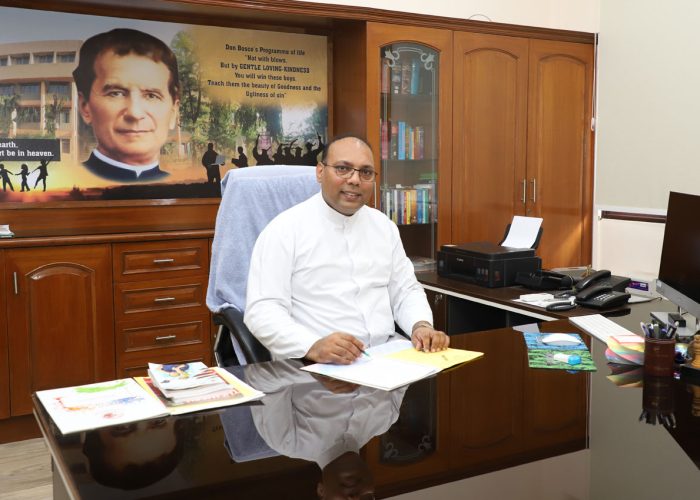
Dear Parents, Guardians and Bosconians
Warm and cordial greetings from Don Bosco School Alaknanda!!!
Education is often viewed as a pathway to acquiring knowledge and skills, but its deeper and more enduring purpose lies in moulding a person into a better human being. True education goes beyond textbooks and examinations; it shapes values, attitudes, and the behaviour of individuals, guiding them to become responsible, ethical, and compassionate members of the society.
Character moulding through education begins at an early age. Schools and educators play a vital role in instilling discipline, respect, honesty, empathy, and a sense of responsibility in the young minds. Through daily interactions, moral teachings, stories, and even the school environment itself, students learn what is right and wrong. These lessons gradually become a part of their character and influence their actions throughout life.
In addition to academic learning, co-curricular activities such as sports, debates, community service, and leadership opportunities help students build traits like teamwork, perseverance, integrity, and self-confidence. Education encourages critical thinking and self-reflection, which are essential in understanding oneself and others, in making ethical decisions, and in standing firm in the face of challenges.
The kind of education that Don Bosco wanted to impart to his students primarily aimed at making them good human beings and honest citizens. The lasting legacy left behind him has inspired many youngsters all over the world for more than a century. We must feel proud that we are Bosconians and benefit greatly from the essence of the educational system given to us by Don Bosco who was deeply humane and intensely spiritual.
I want you to glance through the different facets of the educational system of Don Bosco and imbibe truly from what he wanted to give us:
1. The Preventive System
At the heart of Don Bosco’s educational method is the Preventive System, which focuses on preventing problems before they occur, rather than punishing students after the predicament.
- Reason: Educators should act with logic and fairness, and help students understand the reasons behind rules and expectations.
- Religion: Spiritual development is central. Don Bosco believed that nurturing a relationship with God was essential to personal growth.
- Loving-kindness: Teachers should show genuine care and affection, building strong relationships with students based on trust and respect.
2. A Family Spirit
Don Bosco promoted a school environment that felt like a home. Teachers were to be like older siblings or parents, not distant authoritative figures. This family-like atmosphere encouraged mutual respect, warmth, and a sense of belonging among all.
3. Presence and Accompaniment
Don Bosco emphasized the active presence of educators. Teachers should be present among the students—not just instructing, but participating in their lives, games, struggles, and successes. This presence and closeness built trust and allowed teachers to guide with empathy.
4. Joy and Optimism
He believed that education should be a joyful experience. Encouraging recreation, music, and celebration helped create a positive environment conducive to learning and character-building.
5. Integral Education
Don Bosco sought to educate the whole person: intellectually, morally, emotionally, socially, and spiritually. His aim was to form “good human beings and honest citizens.”
6. Tailored Discipline
Discipline in Don Bosco’s system was gentle and restorative, not harsh or punitive. Correction was done with kindness, always aiming to help the student grow rather than feel ashamed or alienated.
As proud followers of Don Bosco let us strive to walk in the footprints of Don Bosco, the friend of youth.
Fr. Sujith Augustine SDB
Principal
Don Bosco School, Alaknanda